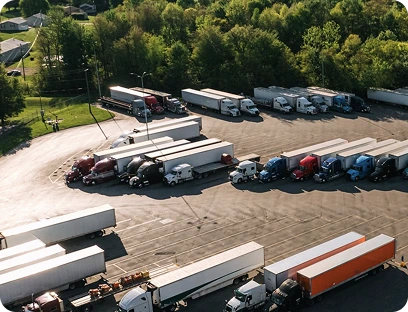
Truck Parking Shortage: Critical national issue

Dropping through the United States and Europe, the shortage of industrial truck resting areas has evolved itself into a vexing issue the freight industry has to battle — which is no more tolerable a couple of inconveniences; if uninterrupted, the drama of their night has played out so thoroughly by the background of the national transportation and environmental agriculture infrastructure.
To be distressed about finding a wage-generating legally-operated parking garage these days by railroads (ourselves knowing with how much glory these investors adorned their train lands) is a key matter. Indeed an ordinary situation, a truck driver in the U. S. reports parking finding screens to be, he proofs, a dangerous fact for them, trucking corporations instructing them, hey, you should be strolling for a while, take it easy; however, the situation cannot be held.
Importance of the Truck Parking Shortage
The kiss of life on the country's modern economies is the trucking industry. Over 73 % of freight, in terms of value, and around 67 % as to weight — trucking does it all in the U. S.-yet the parking facilities for these gargantuan, vehicular money-spinners have woefully, obviously, remained in stasis below the rising number of trucks needing stops.
When truckers are finding it tricky to stop at proper rest areas or truck stops, they, as a rule, stop at shift locations and cause imbalance as follows:
- They rush to leave because of being dead tired.
- Violate hours-of-service rules meant to prevent fatigue.
- Increase risks to themselves and other drivers.
National Truck Parking: A Safety, Compliance Risk
For the USA drivers, it happens regularly, not just from time to time.
Reports indicate that almost all professional truck drivers face the same dilemma, barely able to find legal spaces. Overnight, rest areas in some states are already full, which could force drivers onto dangerous shoulders and ramps with bad visibility and a high collision risk.
This situation has led to the formation of coalitions and national attention. Currently, in the U. S., the National Coalition on Truck Parking, including the Department of Transportation, state agencies, and industry stakeholders, is working specifically to produce genuine results.
However, with all these attempts there is no effective solution for the parking lot supply being completely inadequate, giving rise to an angry array of driver personalities.
Have space
for trucks?
Put your available parking space to work.
List your property on TruxSpot and connect with truck drivers looking for parking
Free to list · Set your own prices
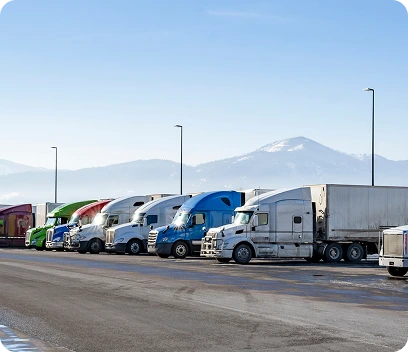
Truck Drivers Hit Hard by the Ongoing Parking Challenge
For many drivers, clamoring through parking shortages is an everyday ordeal. Industry stories tell of drivers pacing back and forth rest areas, now running on empty gas tanks, while being robbed of valuable hours as America's truckers grapple with protracted parking troubles.
Loads of fleet surveys say that drivers could spend a big chunk of time; nearly an hour per day in a desperate search for parking. Such wasted time hikes operational costs, costing yet more accommodations, burning diesel, causing fatigue among the drivers.
Parking crises in Europe are symbolic of worldwide and U. S. shortages.
Not only in the USA does this problem prevail. The truck parking crisis applies to Europe in quite the same light. A 2018 EU Commission report estimated a mere 4,943 spaces as fulfilling security standards set by the EU, while a total of 390,000 separates this already huge number from meeting demand.
That means the drivers in Europe also find it tough to secure parking offering peace of mind. These parking lots are on the major freight routes found in Belgium, Germany, France, or Spain. The gap is anticipated to draw closer to 483,000 by 2040 as the freight volumes expand.
- Effects Across the Supply Chain
With restricted truck parking, impacts make their way all over:
- Safety risks increase—tired drivers forced to park illegally might lead to accidents on highways.
- Crappy operational efficiency—time is wasted by drivers looking for available parking instead of hauling goods.
All this can inflate costs—fuel and lost delivery windows will render bills higher by the wasted hours.
What’s Being Done - And What’s Still Needed
Both America and Europe have indicated the severity of this issue:
- In the United States, both the federal and the state governments are committing to-car-parking expansion and developing methodologies for quantifying the economic benefits of additional truck parking spaces.
- In the European Union, funding and policy frameworks are focused on the recognition of providing more safe and secure truck parking facilities trying to make happier drivers, as well as cutting off the inclination of having deplorable effects on the reliability of supply chains.
However, progress will remain lagging due to many constraints on the movement. There are persistent resistance tactics from local communities, plan restrictions shut down the way, and, though by working with medical institutions, the system continues to limit our bankability.
Ready to
list your truck parking?
Join TruxSpot and make your parking available to truck drivers searching for a place to park
Free to list · Set your own prices