Why Do Truckers Leave Their Engines Running?

Truckers leave their engines running mainly to keep the sleeper cab warm or cool during the mandatory 10-hour rest break, to power appliances and keep batteries charged, and to protect the engine and fuel from extreme cold. Habit and old-school advice play a part too. Modern alternatives — APUs, battery HVAC, and electrified parking spaces — can replace most of that idling.
Why Truckers Leave Their Engine Running: 7 Real Reasons
1. Heating and Cooling the Sleeper Cab
This is the number one reason. FederalHours of Service rulesrequire long-haul drivers to take a 10-hour break after their driving shift, and most of them spend it in the sleeper berth. On a 100°F night in Arizona or a −10°F night in North Dakota, the cab becomes unlivable within an hour without climate control. In many trucks, the engine is the only source of air conditioning, and often of heat too. A rested driver is a safe driver, so many fleets accept idling when it's needed for sleep. (Curious what that rest actually looks like? Seewhere do truck drivers sleep.)
2. Keeping the Batteries Charged
A sleeper cab is a small apartment: refrigerator, microwave, CPAP machine, laptop, TV, phone chargers. All of that runs off the truck's batteries through an inverter. Run them overnight with the engine off and the driver risks waking up to a truck that won't start — a costly delay when a load is due. Idling keeps the alternator charging.
3. Protecting the Engine and Fuel in Extreme Cold
Diesel engines have trouble starting in below 0°C temperatures and diesel fuel becomes thick and congeals, blocking fuel filters and fuel lines. Some drivers opt to keep their truck’s engines running in the harsh, cold temperatures, especially if the vehicle doesn’t come equipped with either a fuel heater or engine block heater.
4. Habit and Old-School Advice
For decades drivers were taught never to shut off a diesel engine, because older engines were harder on starters and slow to warm up. Today's engines don't need long warm-ups or cool-downs, according to theU.S. Department of Energy, but the habit has stuck around.
5. Short Stops and Quick Departures
There are many reasons for leaving the engine running during a 15-minute rest, a quick meal, or waiting at the shipper's dock. Some drivers do it to keep the cab comfortable, others to avoid the hassle of multiple engine restarts. Over a year, even the shortest idle periods can add up.
6. Pets in the Cab
Many drivers travel with dogs or cats. Leaving a pet in a closed truck on a hot or freezing day is dangerous, so the engine keeps running while the driver showers or eats. If you ride with a four-legged co-pilot, check our guide totrucking with a dog.
7. Engine Systems and Air Pressure
A running engine keeps the air system pressurized and the cab's electronics powered, which some drivers prefer when they expect to move again soon.
What about reefer trucks? A common misconception is that refrigerated trucks idle to keep the cargo cold. In most cases, the trailer's refrigeration unit has its own small engine or electric standby power and runs independently of the tractor. The tractor may still idle for the driver's comfort, but the cargo isn't the reason. Learn more in our article onreefer trucking.
Looking for
truck parking?
Find available truck parking near your route or destination with TruxSpot
Daily, hourly and monthly options available
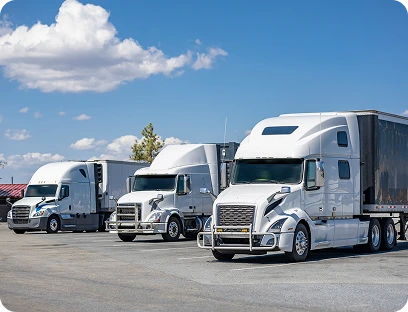
Swift and Other Big Fleets: Why Truckers Leave the Engine Running on Company Trucks
Many people searching "swift why truckers leave engine running" have seen rows of company trucks idling at a terminal or truck stop. Large carriers like Swift face the same trade-off as everyone else: idling burns fuel the company pays for, but a driver who can't sleep is a safety risk.
Based on what company drivers share on trucking forums, large fleets typically handle it this way:
- Idle time is tracked. Telematics systems report each truck's idle percentage, and drivers who idle far above the fleet's target may hear about it from dispatch.
- Idling for rest is usually tolerated. Fleets generally discourage idling while the driver is away from the truck, but accept it when it's needed to sleep through extreme heat or cold.
- Automatic idle management. Instead of APUs, many company trucks use systems that shut the engine off after a few minutes and restart it automatically when the cab temperature or battery voltage drops outside a set range.
- Bunk heaters for winter. Small diesel-fired heaters warm the sleeper for hours on very little fuel, which removes most of the reason to idle in cold weather.
Policies change over time and differ between fleets, so new drivers should ask a recruiter directly about the company's idle policy, APUs, and climate control before signing on.
What Idling Really Costs
Idling looks harmless, but the numbers add up quickly. According to theU.S. Department of Energy, a heavy-duty truck burns about 0.8 gallon of diesel per hour at idle, and a typical long-haul truck idles around 1,800 hours a year — roughly 1,500 gallons of fuel. At $3.50 per gallon, that's over $5,000 a year per truck spent going nowhere.
| Idling cost | What it means |
|---|---|
| Fuel | ~0.8 gal/hour; ~1,500 gallons a year for a typical long-haul truck |
| Engine wear | More hours on the engine, more frequent oil changes, earlier overhauls |
| Emissions systems | Low-load idling can contribute to soot buildup in the diesel particulate filter and more frequent regenerations |
| Fines | Penalties for breaking local and state anti-idling laws |
| Neighbors | Noise and exhaust complaints near homes and businesses |
For owner-operators, cutting idle time is one of the fastest ways to improve margins. Pairing it with a goodfuel card for truckersmakes the savings even bigger.
Is It Legal to Leave a Truck Running?
There is no single federal idling law. Instead, states, counties, and cities set their own limits, and they vary widely. A few common examples:
- California limits most heavy-duty diesel trucks to 5 minutes of idling, with tight rules on sleeper-berth idling.
- New York generally caps idling at 5 minutes.
- New Jersey is among the strictest, with a 3-minute limit in most situations.
Many laws include exemptions — for example, for extreme temperatures, sleeper-berth rest in certain conditions, traffic, or vehicle inspections — but these exemptions differ from place to place. Fines range from a warning to several hundred dollars or more for repeat violations. Before you plan a rest stop in a strict state, check the local rules and look for parking where idling is allowed or where electric hookups are available: see truck parking inCalifornia,New York, andNew Jersey.
Idling in residential areas is a separate problem. Noise and exhaust are among the main reasons cities ban semis from neighborhoods — readcan you park a semi in a residential neighborhoodand our overview ofsemi truck parking laws.
Alternatives to Idling
The good news: drivers no longer have to choose between sleeping well and wasting fuel. TheDepartment of Energy compares idle reduction optionsand found that for trucks that idle a lot, all of them pay off over time.
| Option | How it works | Best for |
|---|---|---|
| Diesel APU (auxiliary power unit) | A small separate engine provides heat, A/C, and electricity using a fraction of the fuel | Year-round long haul, all climates |
| Battery HVAC / electric APU | Battery packs, charged while driving, run an electric A/C and outlets | Overnight rest without engine noise or emissions |
| Bunk (fuel-operated) heater | A small diesel heater warms the sleeper for hours on very little fuel | Winter routes |
| Automatic start-stop systems | The engine starts and stops on its own to hold cab temperature and battery charge | Company fleets without APUs |
| Electrified parking (shore power) | The truck plugs into power at the parking space | Drivers who park at equipped lots |
| Simple upgrades | Insulated curtains, sunshades, block and fuel heaters, a quality sleeping bag | Every driver, low cost |
Most drivers combine several of these, for example a bunk heater for winter and a battery HVAC system for summer.
Where You Park Decides How Much You Idle
A lot of unnecessary idling comes down to one thing: drivers stopping wherever they can find a space. A crowded truck stop at the end of a long day means no electric hookups, no idea of local idling rules, and a cab baking in the sun.
Planning yourovernight truck parkingin advance changes that. On TruxSpot, you can book a space before you arrive and choose lots that fit how you rest: secure, well-litsafe truck parking,refrigerated truck parkingfor reefer loads, orlong-term truck parkingfor your home time. Need a real bed and a shower instead of a night in the bunk? Look forhotels with truck parkingor atruck stop with showers.
Lot owners can turn this into an advantage, too. Offering electrical hookups or clear idling rules makes a lot more attractive to drivers — if you have space,list your truck parking on TruxSpot.
Need
a place to park?
Search available truck parking and reserve your spot before you arrive
Search parking across the U.S.

Frequently Asked Questions
Why do truckers leave the engine running at truck stops?
Mostly to heat or cool the sleeper berth during their 10-hour rest break, to keep batteries charged for appliances, and to keep the engine and fuel warm in extreme cold. Some do it out of habit or to keep a pet comfortable.
How much fuel does a semi truck use while idling?
About 0.8 gallon per hour, according to the U.S. Department of Energy. A typical long-haul truck idling around 1,800 hours a year uses roughly 1,500 gallons of diesel.
Is it bad to let a diesel truck idle for hours?
Yes, in most cases. Long idling wastes fuel, adds engine hours and wear, and can contribute to soot buildup in emissions systems. Modern diesel engines don’t need long warm-ups, so idling only makes sense when there’s no other way to keep the cab safe and comfortable.
Why does Swift let drivers idle their trucks?
Like most large fleets, Swift has to balance fuel costs against driver rest and safety. Based on driver reports, company trucks track idle time and use automatic idle management, and idling is generally accepted when needed for sleep in extreme weather but discouraged otherwise. Policies can change, so drivers should confirm the current rules with the carrier.
Are there laws against truck idling?
Yes. Many states and cities limit idling, often to 3–5 minutes, with exemptions that vary by location. California, New York, and New Jersey are among the strictest.
What can truckers use instead of idling?
Auxiliary power units, battery-powered HVAC systems, bunk heaters, automatic start-stop systems, and electrified parking spaces all keep the cab comfortable without running the main engine.