Our Pittsburgh truck parking locations
Truck and Trailer parking 401 Holiday Dr, Pittsburgh, PA
401 Holiday Dr, Pittsburgh, PA• 2.7 mi
Spring Run Road Extension
31 Spring Run Road Extension, Coraopolis, PA• 13.6 mi
Truck Parking at 590 Pittsburgh Mills Blvd, Tarentum, PA 15084
590 Pittsburgh Mills Cir, Tarentum, PA• 14.6 mi
Truck and Trailer parking 101 E Kensinger Dr, Cranberry Twp, PA
101 E Kensinger Dr, Cranberry Twp, PA• 18.6 mi
The TruxSpot portal provides access to all key highways across the U.S. Here, you can find thousands of parking lots situated close to important transportation interchanges. The majority of them are equipped with everything required for a comfortable and safe stay, including security systems for vehicles and trailers.
With TruxSpot, you get the opportunity to work with optimal parking lots for parking during a business or personal journey. Fast booking, always open spaces, and optional services are waiting for you.
Pennsylvania Freight Hub — Pittsburgh & the Western Pennsylvania Logistics Corridor
I-70, I-76 (Pennsylvania Turnpike) I-79, I-376, US-22 , US-30
Pittsburgh is kinda one of the bigger freight gateways in the Appalachian region, linking the Midwest, Northeast, and Mid-Atlantic through a broad web of interstate routes. It used to be well known for steel production , and over time the city has more or less shifted into a mixed logistics hub, supporting manufacturing, healthcare, energy, building trades, retail distribution, and even intermodal movements. What moves through Pittsburgh as freight can include industrial machinery, steel goods, food loads, consumer items, chemicals, and construction materials.
For commercial drivers in the Pittsburgh metro area, the road trip can feel tough, expect steep terrain, lots of bridges and tunnels, plus constant congestion near interstate interchanges. Drops and pickups often mean working through city streets with steep grades, not much room to maneuver, and traffic that seems to bunch up. So, it really helps to plan truck parking in Pittsburgh before you arrive, because overnight spots inside the city are scarce and regularly taken up.
Pennsylvania Main Roads Serving Pittsburgh
I-76 ( Pennsylvania Turnpike )
The Pennsylvania Turnpike is sort of one of the state’s main east-west freight corridors, linking Pittsburgh with Harrisburg Philadelphia Ohio and the wider Northeast. It usually carries a lot of long-haul commercial loads through out the year, nonstop really.
I-79
Interstate 79 is a major north-south trucking route that connects Pittsburgh with Erie, Morgantown, and Interstate 80. It helps move regional freight, plus gives routes into many industrial locations too.
I-70
South of Pittsburgh, I-70 handles commercial traffic traveling between Pennsylvania, Ohio, West Virginia and the Midwest. It’s a key passageway for manufacturing and distribution freight, day after day.
I-376
I-376 ties downtown Pittsburgh to Pittsburgh International Airport, along with nearby suburbs, industrial zones, and big warehouse developments. Commuter movement is heavy and it often overlaps with commercial vehicle activity as well.
US-22
US-22 supports freight travel across the region east and west of Pittsburgh. It also opens access to manufacturing hubs and commercial developments across western Pennsylvania, not just one side.
US-30
US-30 backs regional deliveries and serves the industrial communities around the metro area. It stays an important alternative route for commercial traffic when things get congested.
Drivers planning deliveries across the Pittsburgh area should budget extra time , because traffic levels are high, bridge crossings add friction and interstate interchanges are pretty complex. Also, reserving truck parking before you reach the metro area can reduce hold ups and honestly makes trip planning smoother.
Pennsylvania Local Rules & Compliance (Pittsburgh Area)
Commercial vehicle enforcement is handled by the Pennsylvania State Police , the Pennsylvania Department of Transportation (PennDOT) and various local law enforcement organizations. In practice it can feel a bit spread out, but yes, all of them, tend to show up.
Idling
Pennsylvania typically limits diesel truck idling to five straight minutes , with a handful of exemptions. Drivers should also follow local anti-idling rules—especially around downtown zones , and near residential pockets where things tend to be quieter.
Weight Limits
Most major interstates are built to carry standard federal commercial vehicle weight limits. Still, some local roads, municipal bridges, and older parts of the network across the Pittsburgh region may carry posted weight restrictions, so it pays to watch the signs carefully and not assume everything is identical.
Load Securement
Inspectors commonly review steel items, machinery, construction supplies, industrial gear and other heavy shipments. Good cargo securement is extremely important, because elevation changes happen often , and stop-and-go traffic can make loads behave in unexpected ways.
Urban Freight Operations
Enforcement activity shows up frequently around industrial parks, river terminals, warehouse districts, and the larger freight routes serving the Pittsburgh metro.
Pennsylvania Fuel & DEF Planning — Pittsburgh Area
Fuel availability is pretty good all throughout western Pennsylvania. You’ll find many major truck stops and travel centers sitting along I-70, I-76, I-79, and I-376, they typically have diesel fuel plus DEF, along with truck parking, places to eat, and some maintenance work too.
A lot of drivers also prefer to refuel a bit outside the downtown zone, before heading into the city’s most busy freight corridors. The thing is heavy traffic, steep grades and frequent slowdowns can raise fuel usage during local moves, even when the route looks straightforward.

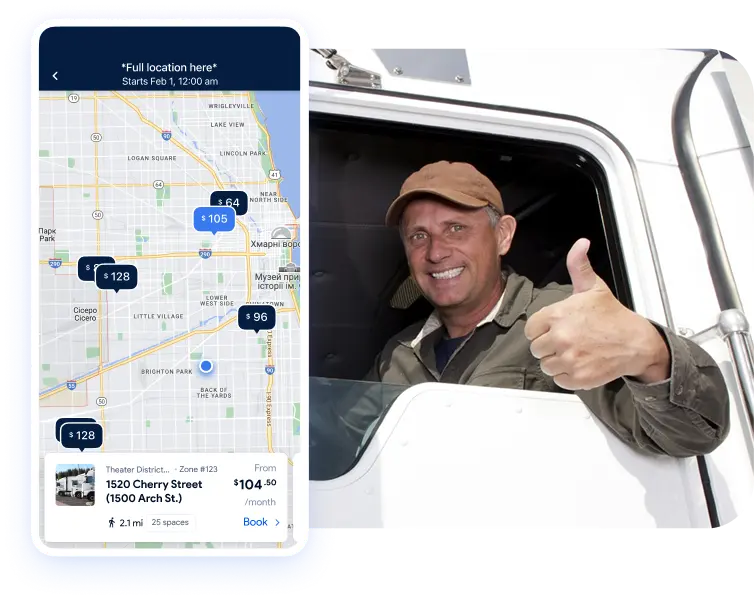
Learn more about TruxSpot’s advantages in our official mobile app
Secured and convenient parking for large vehicles.
Real-time booking.
Payment via card through the app.
Management of your own bookings directly from your phone.










Weigh scales and inspections — Pittsburgh region
Commercial vehicle enforcement is still going strong across western Pennsylvania. Fixed weigh stations, portable scales, and mobile inspection units routinely keep an eye on trucks moving along the region’s main freight routes. Inspection priorities usually lean toward:
Gross vehicle weight and axle weight compliance
Brake systems, tires, steering components, and vehicle safety equipment
Cargo securement for steel, machinery, construction materials, and industrial freight
Electronic Logging Device, (ELD) compliance and Hours of Service regulations
Drivers should assume routine inspections near interstate highways, industrial parks, manufacturing facilities, river terminals, and the big logistics hubs where commercial freight traffic stays high most of the time.